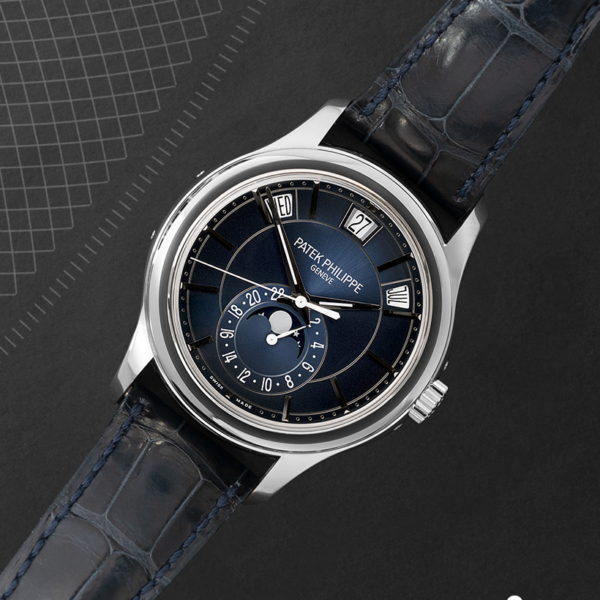
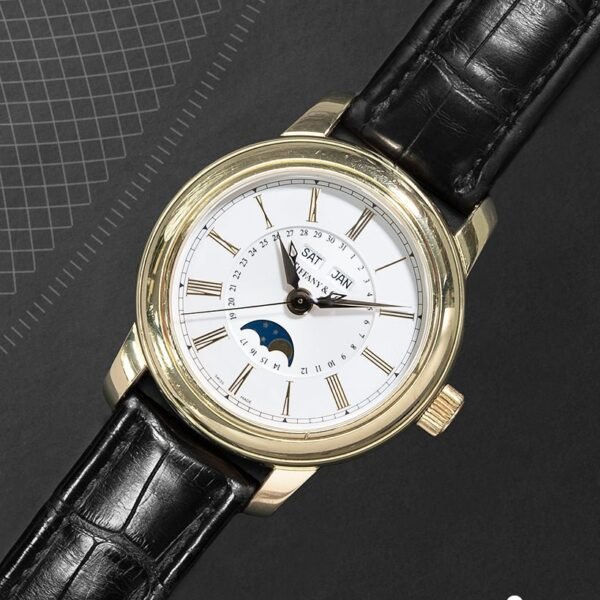
Annual versus perpetual calendar
An annual calendar knows which months have thirty days and needs correcting once a year, at the end of February. A perpetual calendar also knows the leap-year cycle and, if kept running, needs no correction until 2100. The difference in mechanical complexity between the two is large, and so is the difference in price.
Moonphase accuracy
A standard moonphase disc drifts about a day every two and a half years. A high-precision moonphase uses a finer gear train and drifts about a day in 122 years. Both are decorative rather than useful, and both are charming, which is the point.
Setting rules that protect the movement
Never adjust the date on a calendar watch between roughly 9 pm and 3 am, when the change-over gearing is engaged; forcing it strips teeth. On a perpetual calendar that has stopped, wind it fully and advance it through the missing days rather than jumping the date directly.
Service considerations
Complicated watches need specialist servicing and the parts are rarely generic. Before buying, confirm that the manufacture or a competent independent still supports the calibre.
How these watches are authenticated
Every watch in this collection is opened and inspected before listing. We verify the calibre against the reference, examine dial printing and lume ageing under magnification, record timing across multiple positions on a calibrated timegrapher, and check bracelet stamping and clasp codes. See Authentication for the full process and our five condition grades.
Buying with confidence
Free insured shipping with signature on delivery, 14-day returns for any reason with a prepaid label, and a 12-month movement warranty on every mechanical watch. Our authenticity guarantee has no expiry. Start with How to Buy if this is your first purchase from us.
Browse related collections
Cross-shop by maker on the brands page, or move between styles: chronographs, dive watches, pilot watches, complications and skeleton and tourbillon watches.